Built in Ireland
Overhaul TASCC

TASCC records, done at the trailer.

Previous-load declarations, cleaning records, trailer inspections and the audit export — captured on the driver's phone as the load happens. For grain and feed hauliers in Ireland and the UK. In daily use with hauliers working for Irish mills and co-ops.

Overhaul TASCC software: trailer list with last load, last cleaned and last inspection dates on a laptop, and a TASCC cleaning record with method, time and photo on a phone, in a grain yard
Why it matters

The mill wants the records. The folder is in the cab.

Mills, co-ops and merchants in Ireland and the UK require TASCC from the hauliers they use. The records are simple — what was on the trailer before, how it was cleaned, who checked it — but on paper they live in a folder that's never where the auditor is. Overhaul captures them at the trailer, in the yard, on the phone the driver already has.

The AIC reported 524 non-conformances across 600 TASCC audits in the second quarter of 2026. Most are record-keeping: a cleaning that was done but not signed, a previous load that was known but not written down. That is the gap Overhaul closes.

What the auditor looks for

The TASCC haulage records, per trailer.

The TASCC Code of Practice for Road Haulage sets out what a certified haulier must be able to show at audit. Overhaul holds each of them against the trailer, so the evidence is one search away.

Previous-load declaration
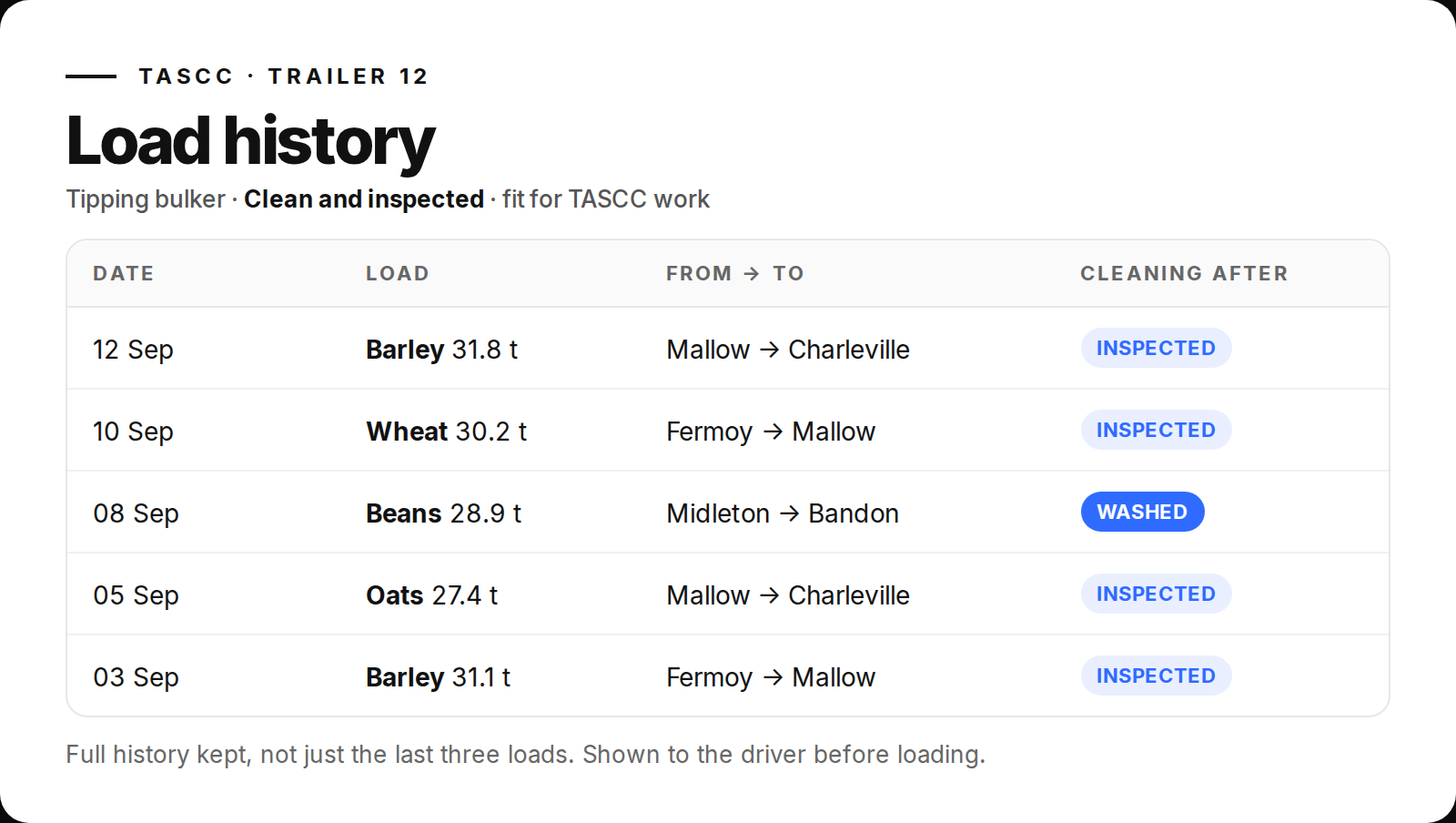
Required before each collection: what the trailer last carried and that it is compatible with food or feed-grade crop. Overhaul keeps the full load history per trailer, not just the last three, and shows it to the driver before loading.
Documented cleaning method and signed record
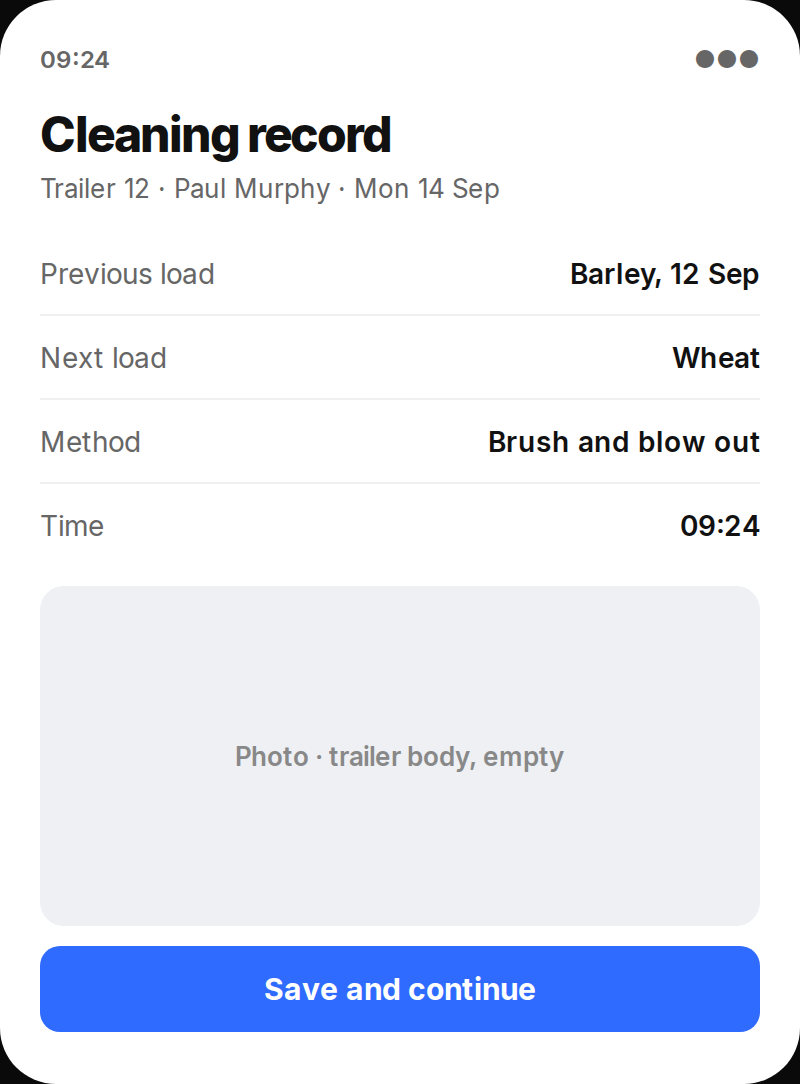
A cleaning method for the body type — tipper, bulker, walking floor — and a dated record signed by the person who did the work. In Overhaul the driver records method, time and a photo at the trailer; the record is signed by being submitted from their login.
Pre-load inspection
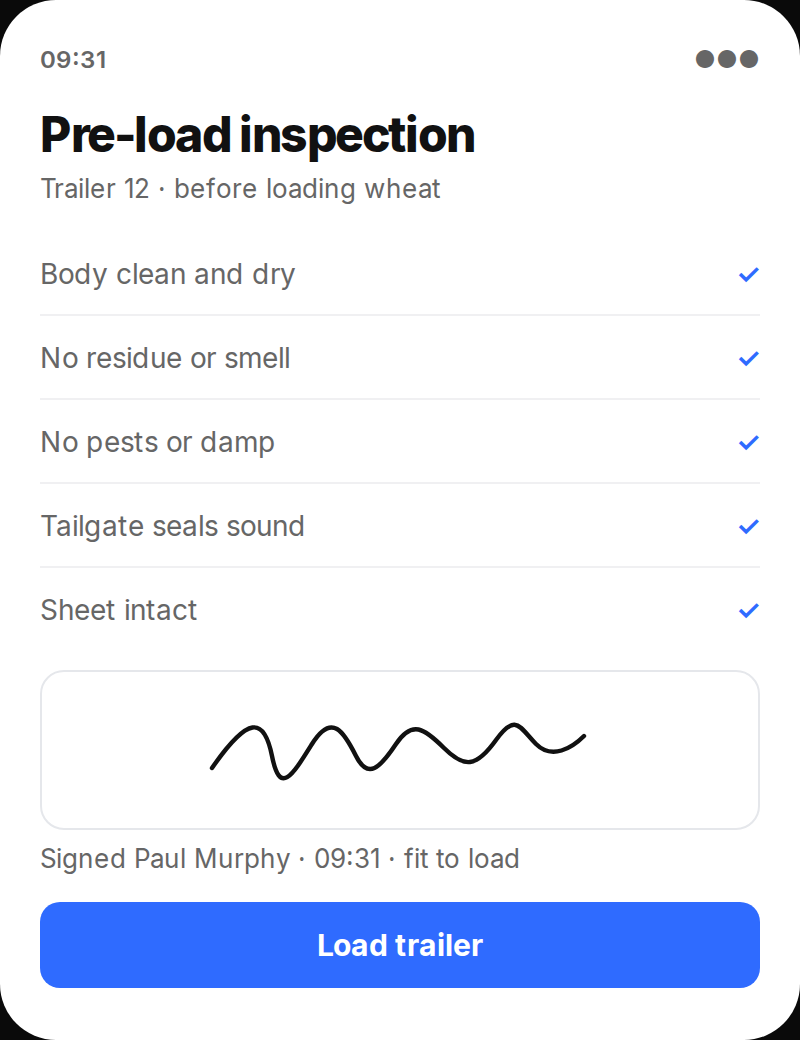
The trailer checked and confirmed fit before the load goes on. Done on the phone, timestamped, alongside the daily walkaround so drivers aren't learning a second routine.
Load tied to vehicle and driver
Every load in Overhaul is assigned to a named trailer and driver. The traceability chain the code asks for is a by-product of dispatching the job, not a separate form.
Exclusion and Sensitive List materials
The trailer's load history shows whether it has carried anything on the AIC Exclusion List or Sensitive List, and what cleaning followed. That's the record the auditor uses to decide whether the trailer is fit for TASCC work.
What's recorded

Four records. Every load. Every trailer.

Previous loads per trailer

Every load logged against the trailer that carried it. The history is there before the next load goes on — no ringing the driver to ask what was in it last week.

Cleaning records

Method, driver, time and photo, recorded as the trailer is cleaned. The record is tied to the trailer and the load that follows, so the sequence is never in question.
Trailer inspection before loading

Checked, signed and timestamped by the driver before the load goes on. Sits alongside the daily walkaround, so drivers aren't learning a second routine.
Audit export

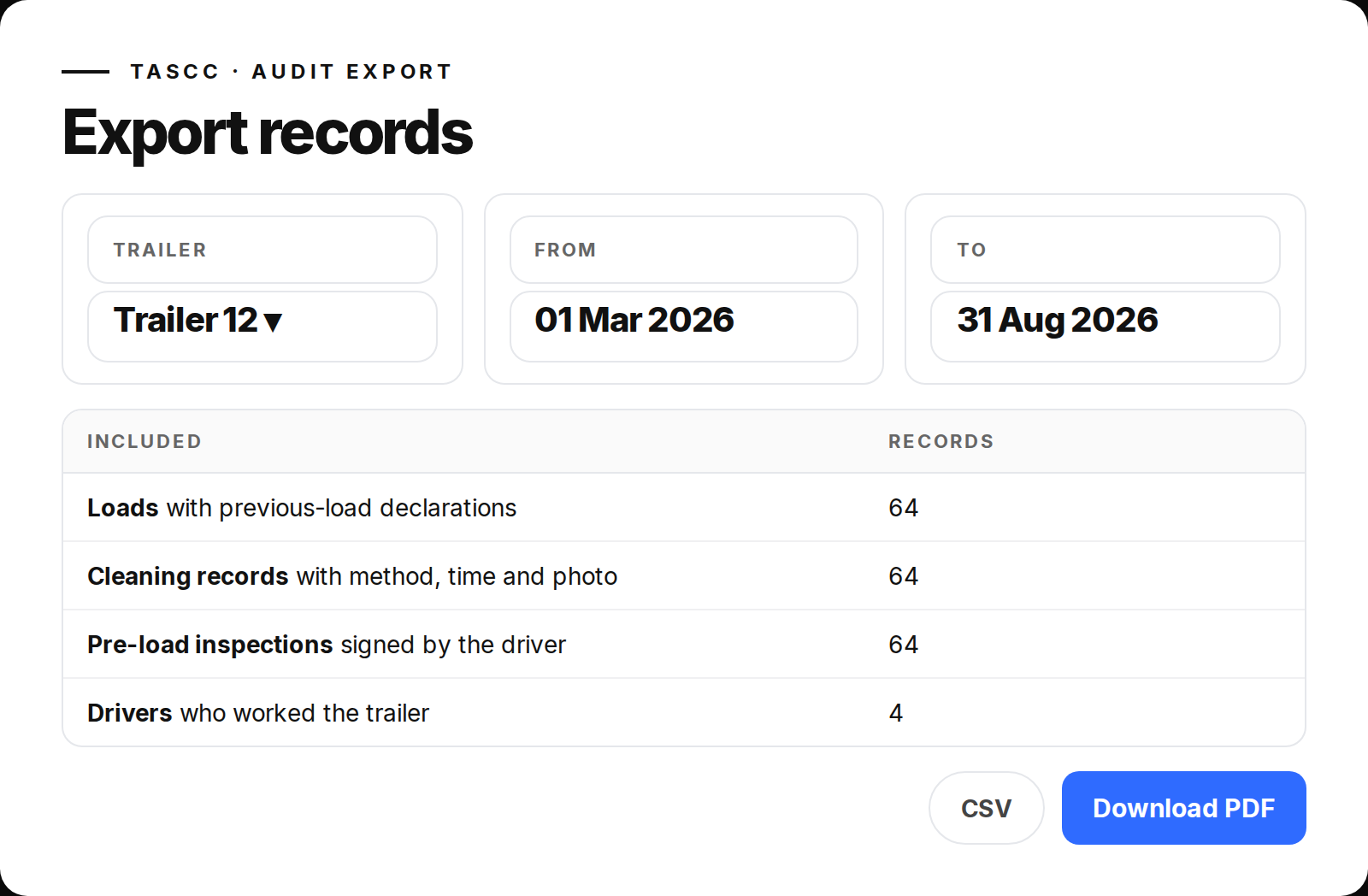
Any trailer, any date range, as PDF or CSV. When the auditor asks for six months on one trailer, it's one action, not a weekend with a folder.

How a load runs

The record builds itself as the job happens.

  1. Assigned.Load goes to the driver's phone against a named trailer.
  2. History.Previous loads on that trailer are visible before anything goes on.
  3. Cleaned.Method, time and photo recorded at the trailer.
  4. Inspected.Driver checks and signs before loading.
  5. Loaded.The load joins the trailer's history. The next driver sees it.
The TASCC dashboard

The whole audit year on one screen.

Every TASCC load feeds a dashboard built for the questions an audit asks. Pick the audit year, the last 90 days, or any date range, and the answers are already there — no spreadsheet, no adding up dockets.
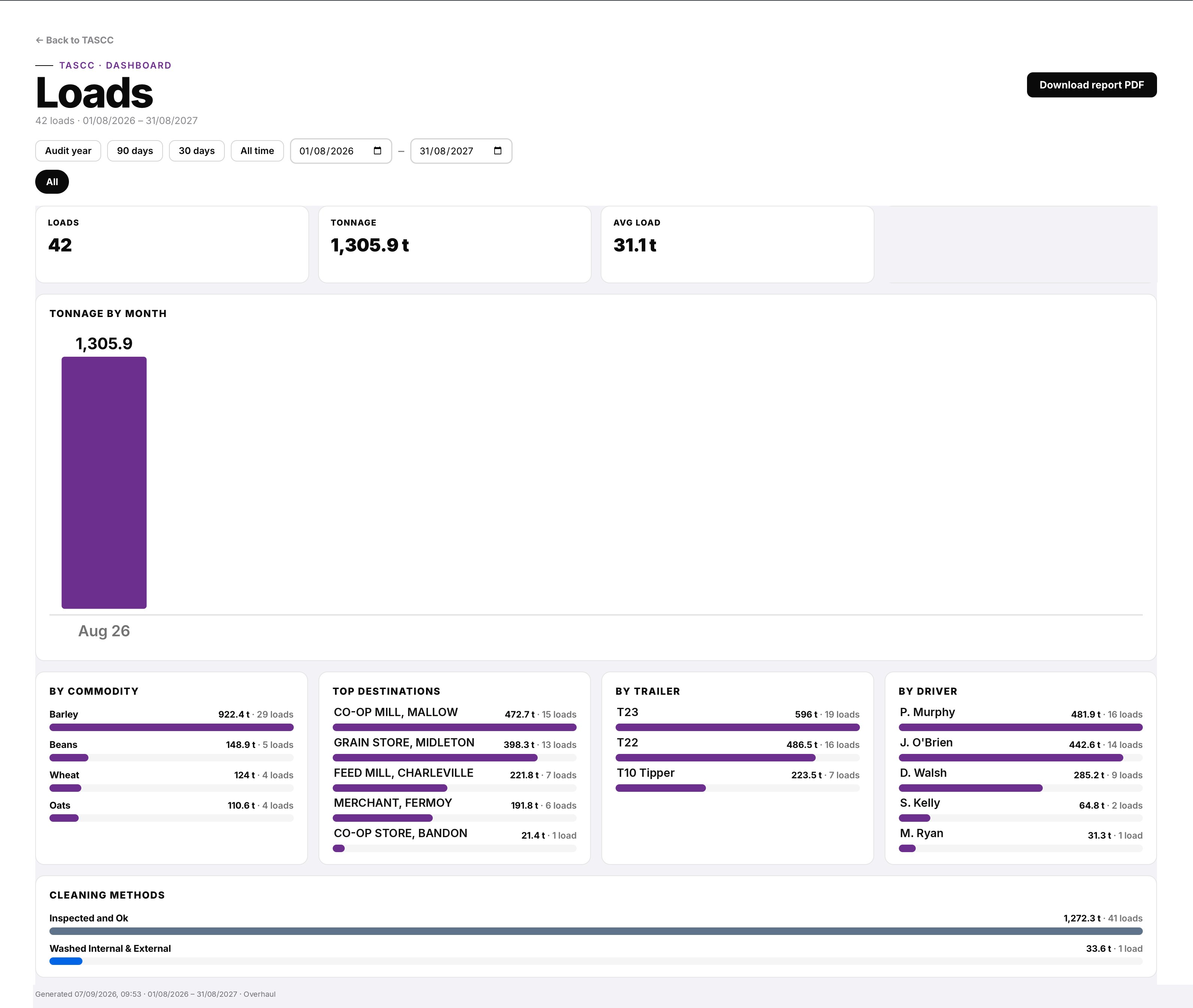
Loads, tonnage and average load
The headline numbers for the period, at the top. How many TASCC loads you ran, the total tonnage, the average per load.
Tonnage by month
The audit year as a bar per month. Harvest peaks and quiet months are obvious at a glance — useful for the auditor, and for planning trailers next season.
By commodity
Barley, wheat, beans, oats — tonnage and load count for each. The answer to "what does this fleet actually carry" without opening a single docket.
Top destinations
Which mills and stores took the tonnage, ranked. The traceability chain from farm to processor, summarised.
By trailer and by driver
Every TASCC trailer with its tonnage and load count. Every driver with theirs. Load tied to vehicle and driver is a code requirement; here it's a table you can read.
Cleaning methods
How every load in the period was cleaned — inspected and clear, washed internal and external — with tonnage and count against each method. If one trailer is always "inspected" and never washed, you'll see it before the auditor does.
Download report PDF
One button. The dashboard becomes a dated PDF, stamped with who generated it and the period it covers. That's the document you hand over at audit.

Audit preparation used to be a weekend with a folder and a calculator. With the dashboard it's choosing a date range and pressing one button.

Common questions

Questions grain and feed hauliers ask.

What is TASCC?

The Trade Assurance Scheme for Combinable Crops, owned by the Agricultural Industries Confederation (AIC) and certified by Kiwa Agri Food. The Haulage Code of Practice covers the road transport of combinable crops and animal feed: what the trailer carried before, how it was cleaned, that it was inspected before loading, and the records that prove it.

Do Irish hauliers need TASCC?

If you haul grain or feed for Irish mills and co-ops, most will require it as a condition of the work. TASCC is a UK scheme, but Irish hauliers are certified under it in the same way.

What does a TASCC auditor ask for?

Per trailer: a previous-load declaration before each collection, a documented cleaning method for the body type, dated cleaning records signed by the person who did the work, a pre-load inspection, paperwork that ties each load to a vehicle and driver, and evidence that drivers understand contamination risk. Overhaul exports all of it for any trailer over any date range.

What are the TASCC Exclusion and Sensitive lists?

The Exclusion List names materials that must never be carried on a TASCC vehicle. The Sensitive List names materials that can be carried but require the AIC cleaning protocol before the trailer returns to TASCC work. The previous-load history on each trailer is how you prove which applies.

Can I get a report for the audit?

Yes. The TASCC dashboard covers any date range — the audit year, the last 90 days, or custom dates — and exports as a dated PDF: loads, tonnage, tonnage by month, by commodity, by destination, by trailer, by driver, and cleaning methods. That is the audit pack.

Does it work on the driver's phone?

Yes. Cleaning records, photos and the pre-load inspection are done on the phone at the trailer. Nothing is written down to be typed up later.

Does Overhaul TASCC work for UK hauliers?

Yes. The records TASCC requires are the same in Ireland and the UK. Overhaul is built in Ireland and used by hauliers working for Irish mills and co-ops; UK grain and feed hauliers can use it the same way.

Is it separate from the rest of Overhaul?

No. Trailers, drivers and loads are the same records the rest of the system uses. The TASCC inspection sits next to the daily walkaround, and a defect found there becomes a workshop job in one tap.
Also on the platform

TASCC is one part of the fleet.

Same login, same system. Walkarounds, renewals, dispatch and POD sit alongside it.

Talk to us about TASCC.

We'll come back within one working day.

contact@overhaul.pro